
The PayPal in Africa Betrayal: Why I’m Saying No to the Giant That Ignored Us
PayPal is coming back to Africa but we should never forget. They were proud, exclusive and looked down upon many Africans for decades. Why are they coming back now?
In 2006, I was a believer. I was one of the first people to register an account with PayPal. I thought I was joining the future of global money.
But for twenty years, that “future” felt like a private club where my continent wasn’t invited. My name is Dennis Obel, and this isn’t just a business critique. It’s my story. It’s the story of how PayPal in Africa became a symbol of corporate exclusion.
2008: A Phone Call and a $45 Heartache
Before I left to work overseas, I registered a PayPal account. Back then we used to use Yahoo email accounts.
In 2008, I was working in East Timor. Like any African working far from home, my first priority was sending money back to my family.
I had a PayPal account. I had the funds. But every time I tried to wire money home to Africa, the system slammed the door in my face. In 2008 and 2009, digital fintech didn’t exist for us. There were no sleek apps or instant transfers.
This was my reality back then:
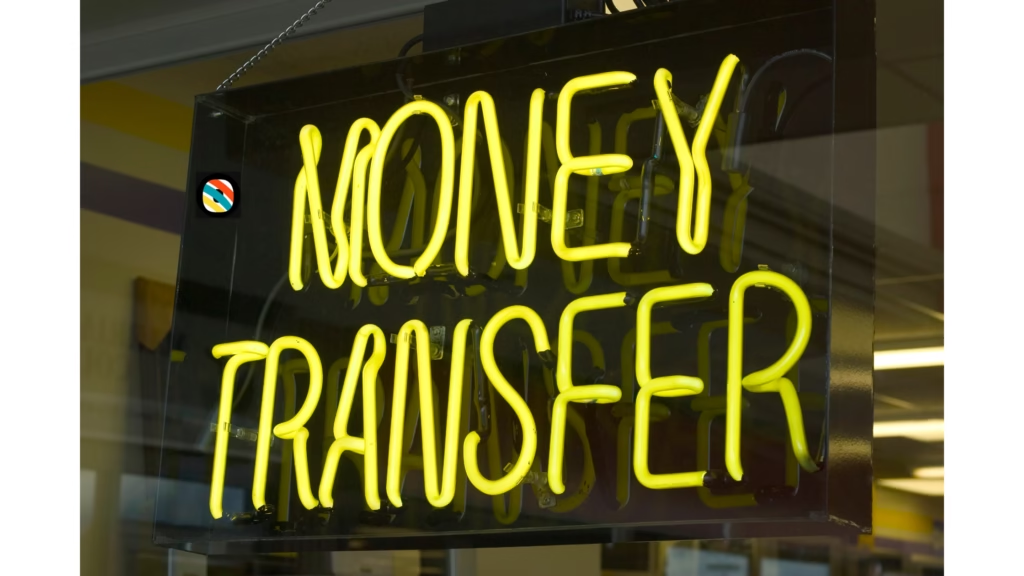
-
I had to physically walk to a Western Union or MoneyGram office.
-
I had to pay roughly $45 USD for a single transfer.
-
I had to fill out paper forms and wait in line.
-
I had to call home repeatedly to ask, “Has the money arrived yet?”
It was expensive, it was exhausting, and it felt like a tax on being African. While I was struggling, where was the “first fintech company”? They were nowhere to be found.
The Elon Musk Irony
The part that stings the most? One of the men who built PayPal, Elon Musk, was born and raised in Pretoria, South Africa. He grew up on African soil. He knew our markets.
Yet, for decades, the company he helped found deliberately ignored Africa. While they were busy revolutionizing payments in the West, they left the African market to the mercy of high-fee corporations. It’s a bitter pill to swallow: an African-born founder at the helm of a company that treated Africa like it didn’t exist.
The Proof: Why PayPal Avoided Africa
Was it just a “mistake”? No. It was a choice.
In 2004, PayPal officially blacklisted several sub-Saharan nations, including Nigeria and Ghana. They cited “high fraudulent activities” and “credit card laundering” as the reasons. Because Africa lacked the digital ID systems they wanted, they decided it was easier to block an entire continent than to build a solution for it.
They saw us as a risk, not a partner. They didn’t think we had the money, and they didn’t think we were worth the effort to protect.
Who Actually Owns PayPal in 2026?
If you think PayPal is still “Musk’s company,” you’re mistaken. It is a giant machine owned by global institutional investors. As of 2026, here is the breakdown of the people who actually decide where your money goes:
| Major Shareholder | Percentage Owned (Approx.) |
| Vanguard Group | ~9.5% |
| BlackRock, Inc. | ~7.2% |
| State Street Corp | ~4.1% |
| Public & Other Institutions | ~79.2% |
These owners care about one thing: growth. They are coming for PayPal in Africa now only because they have no other markets left to conquer and because of the continent’s potential in growth.
The China Lesson: Our Path to Sovereignty
I have just returned from China, and there is a powerful lesson there for Africa. China didn’t wait for Western giants to “approve” them. Instead, they blocked foreign payment systems like Visa, Mastercard, and even PayPal for years.
Why? To protect their own.
By keeping the giants out, they allowed Alipay and WeChat Pay to grow into the most advanced systems in the world. But more importantly, they ensured that data is locally stored.
The Real Heroes: Support Local African Fintech
While PayPal was ignoring us, we didn’t sit around waiting for permission. African entrepreneurs and governments built their own empires. These companies didn’t see “fraud”; they saw a continent of hard-working people, most of whom worked in the informal sector (Jua Kali).
If you want to move your money, I urge you to use the apps that stood by us:
-
Telebirr (Ethio Telecom): 100% owned by the Ethiopian government. It has brought millions of Ethiopians into the digital economy in record time.
-
M-Pesa: A joint venture between Safaricom and Vodacom. It is the gold standard for mobile money and was born right here in East Africa.
-
Interswitch: A Nigerian-founded giant that has been processing our payments since 2002—long before PayPal thought we were “safe” enough.
-
Flutterwave: Founded by Iyinoluwa Aboyeji and Olugbenga Agboola, this company is currently the most valuable fintech in Africa.
Is PayPal a Guest or a Gatecrasher?
Suddenly, in 2025 and 2026, PayPal in Africa is the new corporate mission. They want to invest $100 million. They want to partner with our local apps.
But for me, Dennis Obel, it’s too little, too late. We shouldn’t just “accept” PayPal because they finally decided to show up.
PayPal is like a girl friend who left because you are poor and wants to come back when you are richer.
Don’t let a “western brand” dazzle you. Support the local entrepreneurs who built the house while the giants were hiding.