
The Future of Heritage Travel: Why Your Journey Home is More Than Just a Trip
For years, the conversation around heritage travel has been dominated by logistics: flights, hotels, and tours. But a groundbreaking new study of 303 diaspora travelers conducted by OurRoots.Africa reveals a profound shift in what people truly need for a meaningful homecoming journey.
The data is clear: the future of heritage travel and roots tourism is not about where you go, but how you prepare your heart to get there.
At OurRoots.Africa, we conducted a comprehensive survey to understand the deepest needs of the diaspora community. After rigorously cleaning initial responses down to 303 unique, validated participants, the findings were staggering. They paint a clear picture of a community yearning for a deeper connection, and they validate our core philosophy: “Emotions First, Logistics Second”.
The Global Shift: A Market Awakening to Ancestral Travel
Before looking inward at the emotional journey, we must recognize that the call to return home is echoing on a global scale.
The global heritage tourism market is expanding rapidly, estimated to reach approximately $639.82 billion by 2025 and projected to grow to $857.03 billion by 2030. Within this boom, the African travel market is expected to expand from $25.73 billion in 2025 to $38.01 billion by 2033.
This growth is heavily fueled by the African diaspora seeking to reconnect with their ancestral roots, a movement often referred to as roots tourism or ancestry travel. The rise of affordable DNA testing has made it easier for individuals to discover their origins, sparking a powerful wave of travel to the continent.
In recognition of this profound movement, the African Union even designated 2025 as the “Year of Reparations and African Heritage,” aiming to further galvanize interest in African history among the diaspora.
However, while the global market focuses on building better roads and modernizing heritage sites to accommodate this influx, they are missing the most critical component: the human heart.
Heritage Travel: Identity Anxiety is Nearly Universal
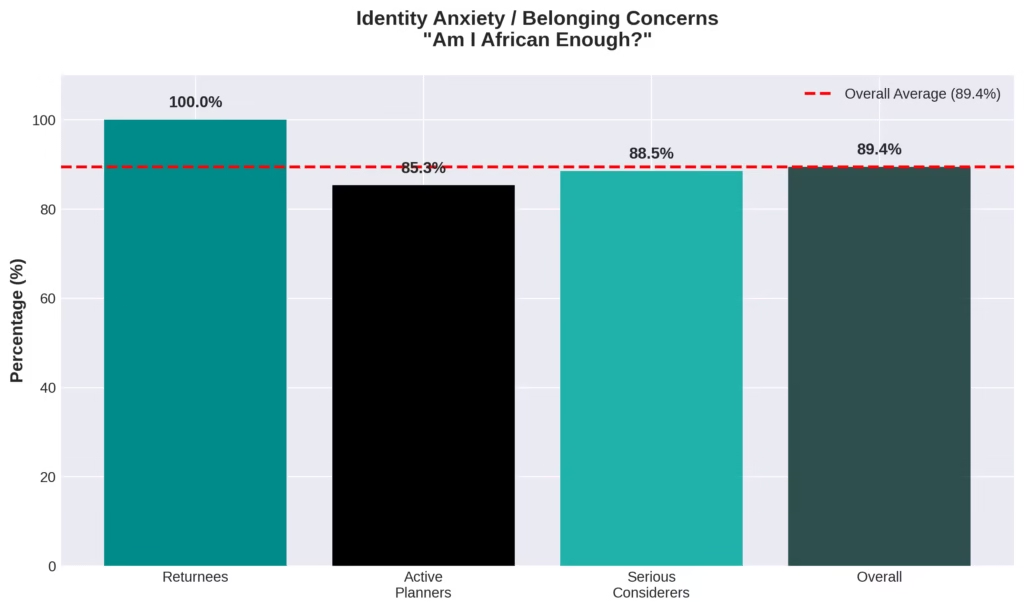
The most powerful finding from our proprietary research is that the feeling of “not being African enough” is a near-universal experience.
A staggering 89.4% of respondents reported experiencing identity anxiety or concerns about belonging. This isn’t a niche feeling; it’s the primary emotional roadblock for the vast majority of diaspora travelers.
This data confirms that the most critical part of heritage travel preparation is not logistical, but emotional. Traditional travel platforms focus on the “what” and “where,” but true homecoming requires a safe space to explore the “who” and “why”. It’s about creating a sense of belonging before the journey even begins.
The Market is Ready: A Massive Opportunity for Deeper Connection
Our research identified three key segments of the diaspora travel market:
-
Serious Considerers (51.5%): The largest group, actively dreaming and researching.

-
Active Planners (31.4%): In the thick of planning, making decisions now.

-
Past Travelers (17.2%): Relatives who have already been and have unique post-trip integration needs.
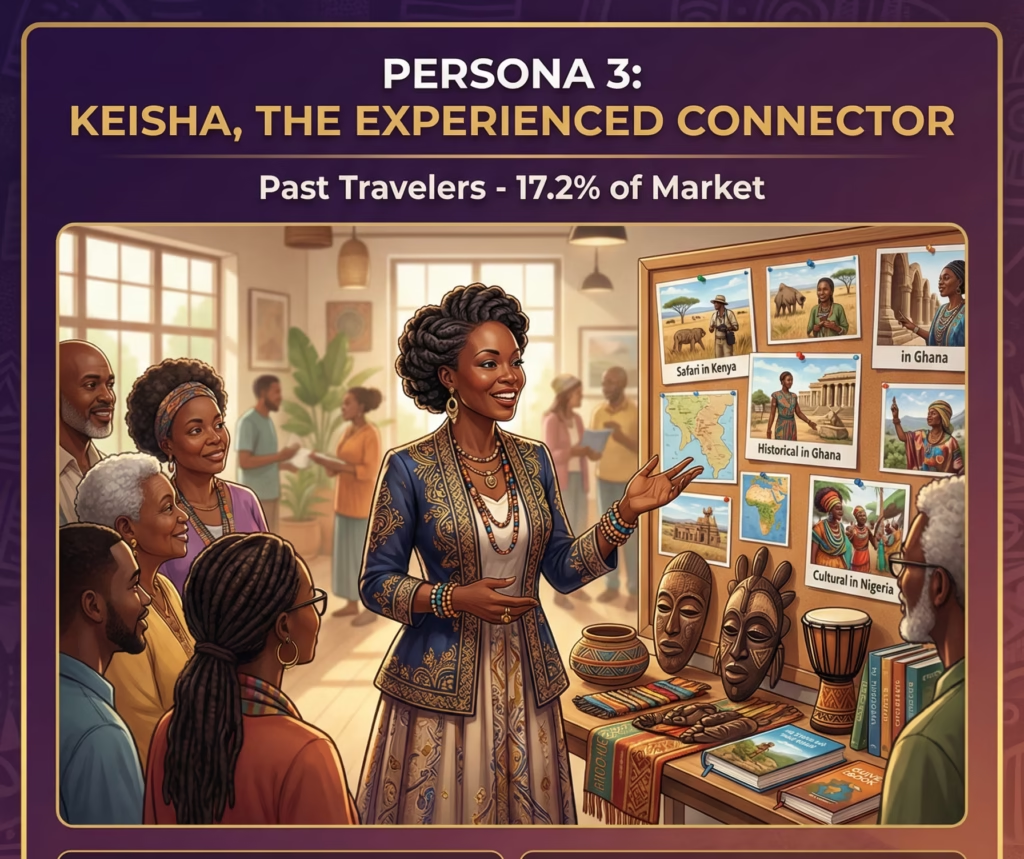
Together, over 80% of the market is in the planning or consideration phase. This demonstrates a massive, immediate need for a pre-travel preparation platform—a digital sanctuary dedicated to the African diaspora.
The Three Pillars of the Future: What the Data Validates
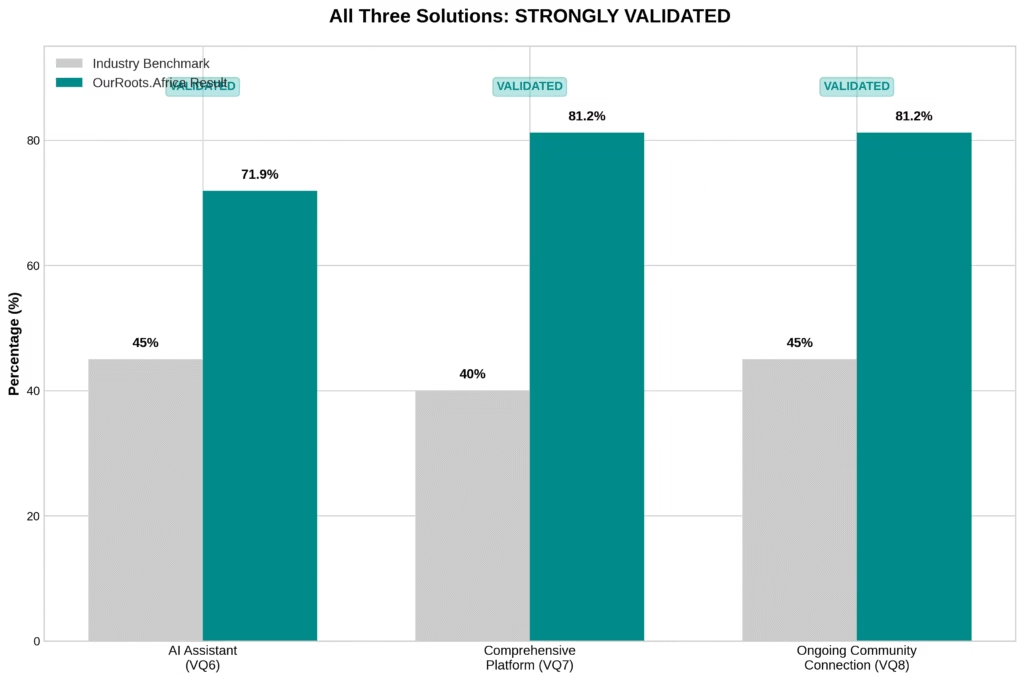
We tested three core solutions, and the response was overwhelming. All three were strongly validated, exceeding industry benchmarks by a massive margin.
1. The Need for an AI Cultural Guide (71.9% Validation)
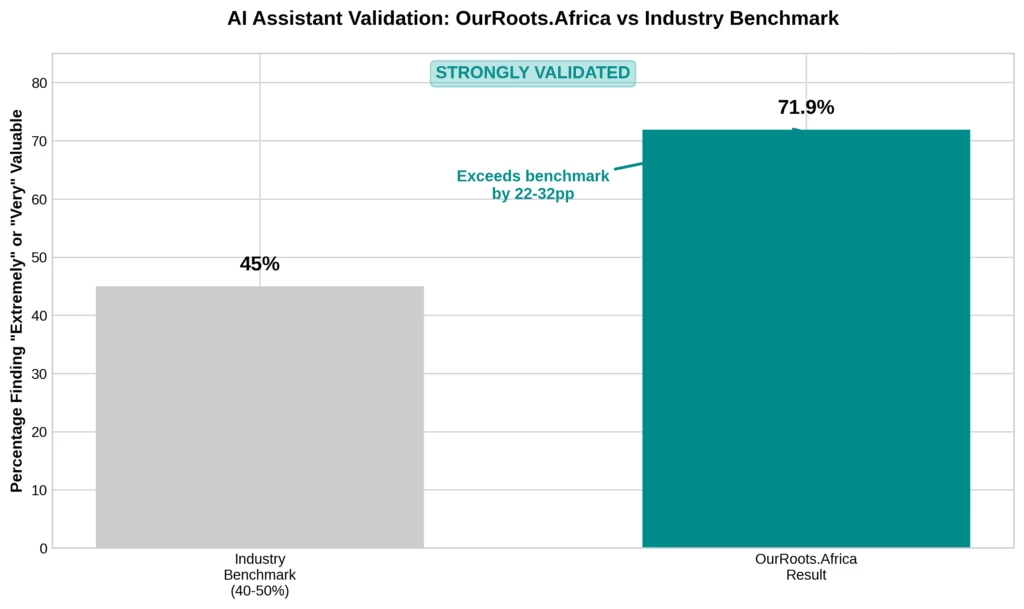
We asked travelers how they would feel about a 24/7 AI assistant trained on authentic Ghanaian and African datasets. A remarkable 71.9% found it “Extremely” or “Very” valuable, exceeding the 40-50% industry benchmark for a validated solution by over 20 percentage points.
Industry experts note that modern travelers expect seamless experiences facilitated by technology, with emerging tools like artificial intelligence potentially enhancing heritage travel by providing personalized recommendations and translating historical information. Our data proves that travelers are actively craving this instant, trusted guidance on cultural questions and emotional support. It validates the exact need for tools like our Amen AI, which provides trauma-informed guidance and cultural intelligence.
2. The Willingness to Pay for a Real Solution (81.2% Validation)
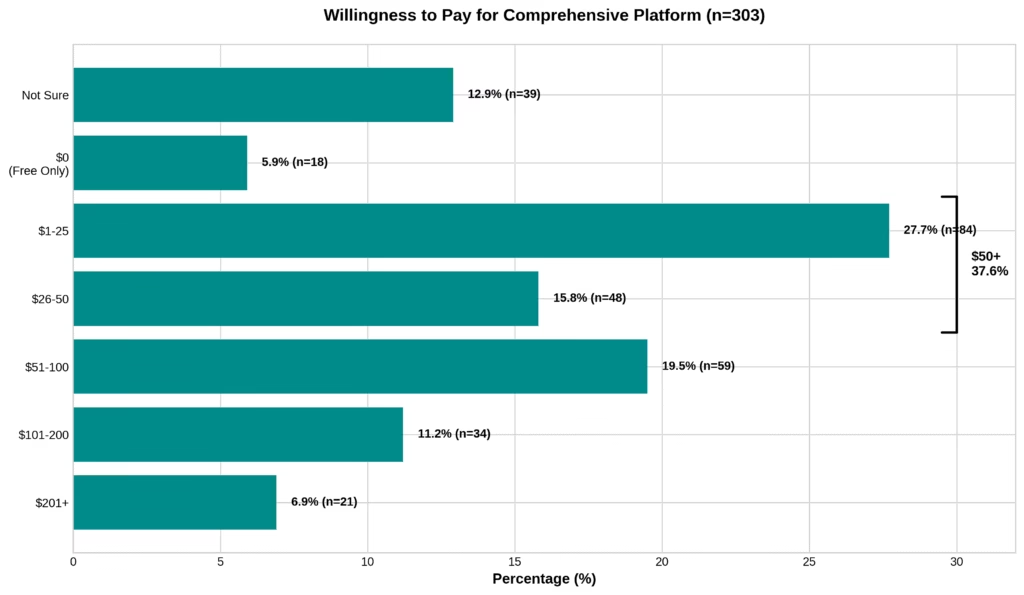
When we described a comprehensive platform for emotional preparation, cultural training, and AI support, an incredible 81.2% of respondents were willing to pay for it. Even more impressively, 37.6% were willing to pay $50 or more—a conversion rate that is 7 to 18 times higher than the typical SaaS industry average of 2-5%. The “Active Planners” are the most motivated, with 55.8% willing to pay $50 or more. This isn’t just validation; it’s a clear signal that the market is starved for a real solution and is willing to invest in it.
3. The Desire for Ongoing Connection (81.2% Validation)
The journey doesn’t end when the trip is over. 81.2% of respondents said that an ongoing community connection would be valuable, with the highest need coming from those who have already returned (86.5%).
Macro trends show that diaspora travelers are looking for immersive experiences to engage deeply with history and connect with local communities. Our research validates that this desire for connection extends beyond the physical trip, highlighting the importance of post-journey integration and building a lasting community. We see our users not as customers, but as family we are welcoming home.
What This Means for the Future of Heritage Travel
The data is undeniable. The future of heritage travel is not about selling tickets; it’s about building belonging. It is a pilgrimage, not a vacation. It’s about providing the tools for emotional preparation and cultural intelligence that allow travelers to have a truly transformative experience.
This is why we are building OurRoots.Africa. We are not just following the trend; we are leading it, with a platform built on a deep, data-driven understanding of what the diaspora community truly needs.
(Proprietary analysis is based on a comprehensive survey of 303 validated respondents from the African diaspora, conducted in November 2025. Macro-economic data sourced from industry projections for 2025-2030).
Join the Waitlist and Be Part of the Future of Heritage Travel
OurRoots.Africa: We Didn’t Just Join the Conversation. We Started a New One.